 Music Academy
 Instrument pathway
Ask the learner to echo, choose, and describe one sound feature before adding a new label.
Loading…
Loading…
Brief cues stay optional for quiet rooms, headphones, and sensory-sensitive practice.
Name how the sound is made, open a source note, then decide whether the lesson has enough context.
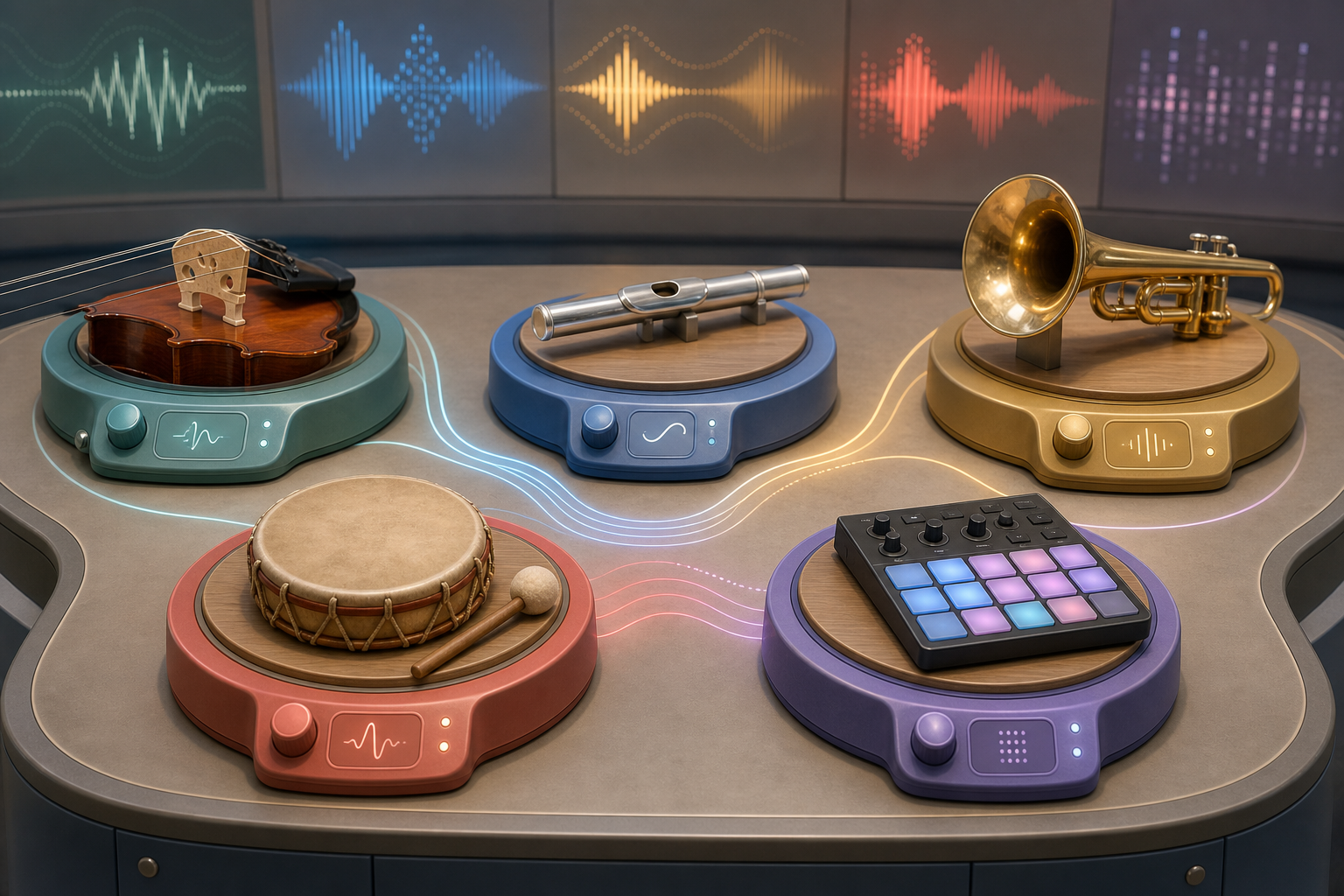
generic synthetic plucked, blown, struck, and shaken examples for family comparison
Echo a small Cultural Instrument Discovery pattern, draw or choose the sound shape, then repeat once with caregiver support.
Ask the learner to echo, choose, and describe one sound feature before adding a new label.
No sacred, ceremonial, or living-community music is imitated without approved sources and review.
Timbre is not decoration; it is visible material, size, and motion.
The strike starts the material vibrating.
This teaches vibration mechanics without claiming a specific performance tradition.
 Across Koydo
 Practice guardrail
 Reflect