 Music Academy
 Instrument pathway
Ask for one process-level observation: what changed, why it changed, and what to try next.
Loading…
Loading…
Brief cues stay optional for quiet rooms, headphones, and sensory-sensitive practice.
Name how the sound is made, open a source note, then decide whether the lesson has enough context.
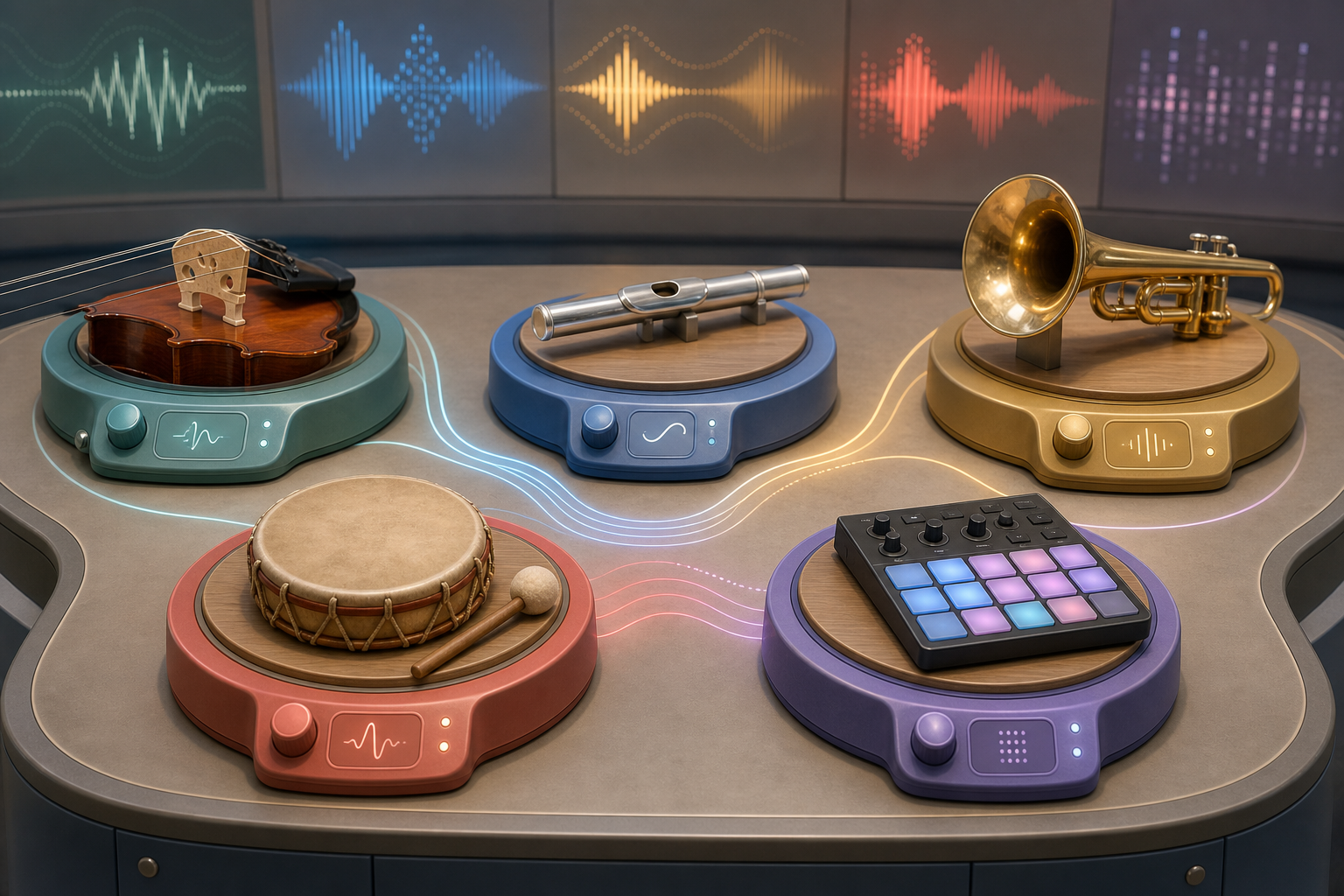
synthetic bright plectrum pluck with skin-body resonance
Practice one Shamisen technique target, compare two attempts, and explain the musical evidence.
Ask for one process-level observation: what changed, why it changed, and what to try next.
No sacred, ceremonial, or living-community music is imitated without approved sources and review.
String length, attack direction, and resonance become a visible pitch-and-color map.
A wide plectrum attack gives the sound a sharper edge than a gentle pluck.
This model teaches source mechanics; historical or repertoire claims need a sourced lesson note.
 Across Koydo
 Practice guardrail
 Reflect