Art visual-score card Contour line score Draw rising, falling, or looping lines to show where the sound travels.
Contour line score line | pitch direction and melodic contour Texture and dynamics score color | loudness, density, and texture Form and space score space | repetition, contrast, and form
Pattern bridge: visual score studio Art uses visual marks as a playable score where line, color, and space map to sound features.
toddler Caregiver echo: visual score studio Listen, move once, and choose between two sounds with caregiver support. Draw the sound shape, play it back, then point to one mark and name the sound feature it represents. preschool Play and name: visual score studio Tap, sing, move, or draw a tiny pattern before naming one contrast. Draw the sound shape, play it back, then point to one mark and name the sound feature it represents. early elementary Pattern bridge: visual score studio Repeat a short rhythm, change one part, and say what changed. Draw the sound shape, play it back, then point to one mark and name the sound feature it represents. elementary Make and explain: visual score studio Build a four-beat, four-mark, or four-step music plan and connect it to the lesson target. Draw the sound shape, play it back, then point to one mark and name the sound feature it represents. middle Compare and revise: visual score studio Compare two sound choices, revise one, and justify the decision with evidence. Draw the sound shape, play it back, then point to one mark and name the sound feature it represents. high school Design critique: visual score studio Design a short score, cue map, or practice plan, then critique its effect and constraints. Draw the sound shape, play it back, then point to one mark and name the sound feature it represents. young adult Portfolio studio: visual score studio Package a music artifact with a rationale, accessibility choice, rights boundary, and next practice target. Draw the sound shape, play it back, then point to one mark and name the sound feature it represents.
Ask the learner to connect one mark to pitch, dynamics, texture, space, or form. Stage adaptation: Repeat a short rhythm, change one part, and say what changed.
Learner practiced visual score studio through steady pattern, one revision, and one spoken explanation. 1 Set the listening goal Pattern bridge: choose one art sound feature to notice before starting. Learner chose one art listening goal. 2 Try the music bridge Repeat a short rhythm, change one part, and say what changed. Then connect it to Art uses visual marks as a playable score where line, color, and space map to sound features. Learner tried the art music bridge through steady pattern, one revision, and one spoken explanation. 3 Save the next move Save one sentence: what changed, what evidence proves it, and what to try next. Learner saved one private art reflection and next step. 4 Link mark to sound Point to one line, color, texture, or space choice and name its sound feature. Learner linked one visual mark to a sound feature. 5 Revise the score Change one mark, replay or describe the result, and name the musical change. Learner revised one visual-score mark and named the sound change. Mark-to-sound proof Line to pitch Link one visible mark to a sound feature, then revise one part of the score.
Line to pitch Color to dynamics Space to rest
0 proofs saved this session Contour comic score Draw a short visual score that shows pitch contour, dynamics, and story mood.
Ages 2-4 Big line, little sound Multisensory contrast, motor response, and adult-modeled visual-to-sound language. Ages 5-7 Color the beat Beat tracking, visual patterning, and basic composition vocabulary. Ages 8-10 Contour comic score Melodic contour, narrative interpretation, and art-to-music evidence. Ages 11-13 Texture and form board Form analysis, visual design, and composition planning. Ages 14-18 Score design critique Design critique, notation literacy, and portfolio-ready revision. Ages 19-25 Portfolio visual-score brief Independent composition design, teaching explanation, and accessibility-aware portfolio work.
Ask which line shows pitch and which color or space shows volume or mood.
Learner drew a visual score and linked two marks to sound features. Hear contour Listen for where the sound rises or falls. Draw path Draw the sound path as a line. Add mood Add one color or space choice for mood.
 Music Academy
 Music Academy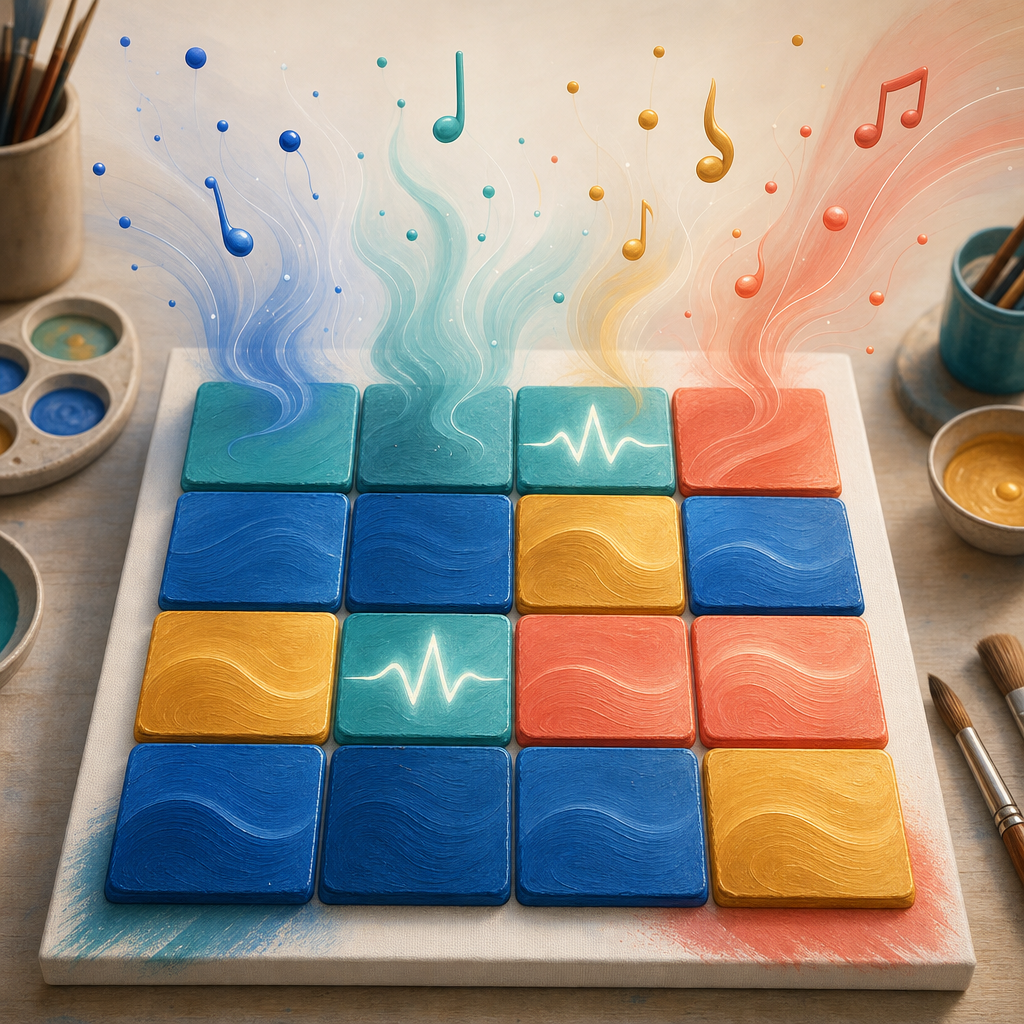
 Age-stage visual score plans
 Cross-Koydo transfer
 Portfolio artifact